Sleep & Comfort
Mattress Materials and Heat Management for Comfortable Sleep
A mattress does not create the weather in a bedroom, but it can change how that weather feels against the body. In Nevada’s dry, hot climate, the cover, comfort layers, and support core all deserve a closer look when warmth threatens to follow you into bed.
By late evening, the desert may have released much of the day’s heat, yet a bedroom can remain warm. Air conditioning, open windows, ceiling fans, bedding, and the sleeper’s own temperature all help determine whether the night feels restful. The mattress matters too—not as a thermostat, but as the surface and structure that either allow heat and moisture to move away from the body or hold them close.
That distinction is easy to lose in a marketplace crowded with promises of “cooling” sleep. A material name alone cannot guarantee a cool sensation. Foam, latex, cotton, wool, and coils each behave differently, but performance depends on the complete construction: layer thickness, density, quilting, fabric, airflow pathways, and how a mattress works with the room around it.
For people comparing mattresses in Nevada, the useful question is not simply, “Which material sleeps coolest?” It is, “How might this specific design manage warmth for my body, my bedding, and my bedroom?” That shift from slogan to construction detail makes it easier to choose a bed for comfort rather than marketing shorthand.
Why a mattress can feel warm
During sleep, the body transfers heat to nearby surfaces and releases moisture. When a mattress closely surrounds the body, it may reduce air movement around the sleeper and make warmth more noticeable. A plush, conforming comfort layer can feel inviting because it cushions pressure points, but close contact may also limit the space through which heat can disperse.
This does not mean that contouring materials are inherently uncomfortable in hot weather. It means that comfort has more than one dimension. A sleeper may value pressure relief, stable support, and a soft surface, while also wanting less heat buildup. Mattress design is an effort to balance those needs, not a contest in which one material wins for everyone.
Several influences operate at once:
- Contact and contouring: The more a layer conforms to the body, the more surface area may be in close contact. That can feel supportive, although some sleepers find it warmer.
- Air movement: Open structures, breathable covers, and a suitable support base can help air circulate through or around parts of a mattress.
- Moisture handling: Fibers and fabrics differ in how they absorb and release moisture. A surface that feels dry can be important when a sleeper becomes warm.
- Room conditions: Indoor temperature, humidity, ventilation, sunlight, and bedding can change the experience of the same mattress.
- Personal differences: Sleeping position, clothing, body temperature, and individual sensitivity shape what “cool” or “warm” feels like.
In a dry Nevada summer, outdoor humidity may be low, but indoor comfort is still shaped by the room itself. Sun-exposed windows, a warm mattress foundation, thick bedding, and limited airflow can outweigh a material’s advertised cooling qualities. A good comparison therefore starts with the bed and the bedroom together.
The cover: the first point of contact
The cover is the part of the mattress a sleeper feels first, and its fabric, quilting, and finish can influence the surface experience. Cotton is often selected for its familiar hand and breathability. Wool may help buffer moisture and temperature changes. Synthetic fabrics can vary widely, from smooth and lightweight knits to thicker quilted constructions. None is automatically best in every climate or for every sleeper.
Pay attention to the way a cover is built, not just the fiber named on a label. A thick quilted panel can feel different from a lightly padded knit, even when both use similar natural fibers. A waterproof or protective layer may also affect how the surface feels and how moisture moves. If a mattress has a removable cover, check the care instructions before assuming it can be washed or altered at home.
Sheets and mattress protectors are part of this first-contact system. A dense, heavy protector can add another layer between the body and the mattress, while a lightweight, breathable option may preserve more of the original surface feel. The label “cooling” should be treated as a prompt to investigate: ask what the product is made of, how it is constructed, and whether its care requirements suit your needs.
Comfort layers: cushioning, contouring, and airflow
Comfort layers sit near the top of a mattress, beneath the cover. Their job is to cushion the body and distribute pressure, especially around the shoulders and hips. Memory foam, latex, and other foams are common options, and each can be engineered in many ways. Thickness and density matter as much as the broad material category.
Memory foam is known for close contouring. Some sleepers appreciate its pressure relief and reduced partner disturbance; others prefer a surface that responds more quickly or feels less enveloping. Foam formulations and layer designs differ, so one mattress cannot stand in for all memory foam mattresses. If heat is a concern, look for clear information about the layer’s composition, depth, and any channels or other construction features intended to encourage airflow.
Latex tends to feel more buoyant and responsive than deeply contouring foam, although the sensation varies with firmness and construction. Dunlop and Talalay are two manufacturing approaches commonly discussed in latex bedding; shoppers should look at the actual layer specifications rather than rely on a label to predict the full feel. Latex can be part of a mattress designed for airflow, but the cover, surrounding layers, and support structure still shape the overall result.
Some designs use perforations, channels, or shaped foam to create pathways through a layer. These features may influence ventilation, but their presence does not guarantee a particular temperature experience. A thick comfort stack can still feel warm to someone who prefers a firmer, more open surface. Conversely, a sleeper who values close cushioning may find that the comfort trade-off is worthwhile.
For a practical comparison, note the number and depth of comfort layers, the type of material in each, and whether the manufacturer explains their function. “Breathable” is more informative when supported by construction details than when it appears as a stand-alone adjective.
Support systems: what coils can—and cannot—do
The support core carries much of the sleeper’s weight and helps maintain the mattress’s shape. In an innerspring or hybrid design, coils create a structure with open space between components. That structure can allow more air movement within the core than a solid block of material, although the comfort layers above it may still influence surface warmth.
Individually wrapped coils are designed to move more independently than a connected spring unit. They can provide a responsive feel and help limit movement travelling across the mattress. Coil count alone is not a complete measure of comfort or durability: coil shape, gauge, zoning, perimeter construction, and the layers above all contribute to how the bed feels.
A coil system does not cancel out every source of heat. If the upper layers are thick and close-conforming, the sleeper may still experience a warm surface. Likewise, a mattress with a more solid support core is not necessarily uncomfortable in a warm room. The aim is to understand the whole architecture rather than treat one component as a guarantee.
The foundation matters as well. A mattress placed on a base that restricts ventilation may behave differently from one on a compatible slatted foundation. Always check the manufacturer’s requirements for support spacing and foundation type. A suitable base protects the mattress and can preserve the airflow its design intends to provide.
How to compare mattress materials in Nevada
Climate is a useful starting point, not a verdict. Nevada includes varied elevations and local conditions, and indoor environments differ from home to home. A bedroom in a sunlit apartment, a well-shaded house, and a high-elevation home may present different nighttime challenges. A thoughtful comparison considers those circumstances alongside sleep position and preferred firmness.
- Start with the room. Consider nighttime temperature, ventilation, direct afternoon sun, and whether air conditioning or a fan is part of your routine. Persistent room heat may call for changes beyond a mattress purchase.
- Identify the sensation you want. Do you prefer a lifted, responsive surface or a deep, close hug? People who sleep hot may wish to test how much contouring feels comfortable before choosing a thick foam top.
- Read the layer details. Look for material type, layer thickness, cover construction, and support-core design. Specifics make it possible to compare mattresses more fairly than broad claims do.
- Check the whole sleep setup. Sheets, protectors, blankets, pajamas, and the foundation can all affect how warm the bed feels. A new mattress is only one part of that system.
- Use a trial period carefully. If a retailer offers a home trial, review the conditions, return fees, exchange limits, and required break-in period. Keep notes on comfort over several weeks rather than judging from a brief first impression.
- Keep support in the decision. Cooling should not come at the expense of alignment or pressure relief. A comfortable mattress must suit the sleeper’s body and position as well as their temperature preference.
When testing in a showroom, remember that the room, clothing, and duration of the test differ from home. A few minutes can help identify firmness and surface feel, but it cannot fully predict how a mattress will perform through a warm night. Product specifications and a clear, usable trial policy are valuable complements to a short test.
A closer look at an organic hybrid option
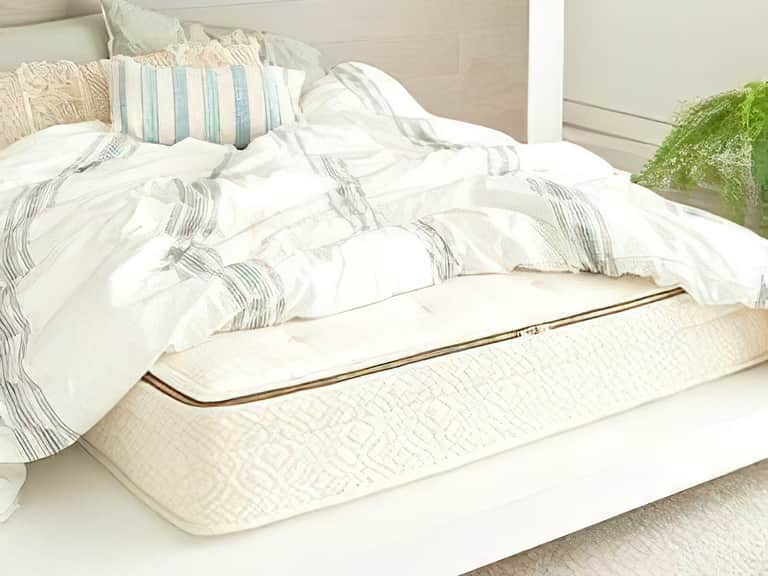
For shoppers interested in natural materials and a coil-based design, the Naturepedic Azure Hybrid Organic Mattress offers one example of how several materials can be combined. Its listed construction includes a 10-inch profile with six inches of wrapped coils and three inches of organic Dunlop latex, along with a zippered organic cotton cover and a wool blend that includes alpaca and cashmere.
That combination is relevant to a discussion of heat management because it brings together a spring support core, latex comfort, and natural fibers at the surface. The design description identifies breathable organic and natural materials, but that is not a promise that every sleeper will experience the same temperature. Individual response depends on body, bedding, room conditions, and preferred degree of contouring.
The Azure is also described as customizable, with dual-firmness options in selected larger sizes. That feature may be useful to partners who have different support preferences, though shoppers should confirm current size availability and configuration details with the seller. Its premium positioning, substantial materials, and overall weight may also be relevant practical considerations, particularly when arranging delivery or moving the mattress.
Certifications can help shoppers understand how materials and production are assessed, but they should be read precisely. A certification applies to defined standards and scopes; it does not by itself establish that a mattress will sleep cool, relieve every kind of discomfort, or suit every household. For any product, compare the full specifications, warranty, return terms, and care guidance before deciding.
Small changes can alter the feel of the bed
Before replacing a mattress, consider whether bedding or the bedroom is contributing to the problem. Lightweight sheets, fewer insulating layers, and a breathable protector may change the surface feel. A fan can improve air movement, while shading windows from strong afternoon sun may reduce how much heat a room retains into the evening. These measures do not solve every comfort issue, but they can help identify whether the mattress itself is the main source of discomfort.
Also look at the foundation and the space around the bed. A mattress on a compatible base with adequate clearance may have different ventilation conditions from one enclosed by a solid platform or crowded with storage. Follow the manufacturer’s support instructions rather than improvising a setup that could damage the mattress or affect its warranty.
If a mattress is new, allow time for adjustment where the seller recommends it. Materials can feel different after repeated use, and sleepers may need a period to adapt to a new firmness or support profile. At the same time, persistent discomfort is worth addressing through the retailer’s trial or support process rather than enduring an unsuitable sleep surface indefinitely.
A clear-eyed approach to “cooling” claims
Cooling language can refer to different things: a fabric that feels cool when first touched, a structure intended to permit airflow, a material designed to manage moisture, or a claim about temperature regulation during sleep. Those are not interchangeable benefits. A cool-to-the-touch finish may offer an immediate sensation without changing how warm the sleeper feels several hours later.
Ask what the feature is, where it appears in the mattress, and how it relates to the rest of the design. If the answer is vague, compare objective construction details instead. No material can make a hot room disappear, and no mattress should be expected to deliver an identical experience across different bodies and environments.
For Nevada sleepers, realistic expectations are especially useful. Dry air does not automatically make a bed feel cool; warm indoor temperatures and close contact can still build discomfort. A mattress that balances breathable construction, appropriate support, and preferred cushioning may be a better fit than one chosen for a single headline feature.
The practical conclusion
Mattress materials influence sleep temperature through their interaction, not in isolation. A cover determines the first touch; comfort layers affect cushioning and body contact; and the support core contributes structure and potential airflow. Bedding, the foundation, and bedroom conditions complete the picture.
When evaluating mattresses, compare the full build and ask how it matches your own needs. Consider whether you prefer a buoyant or close-contouring surface, how much pressure relief you want, and what the bedroom feels like at night. Treat claims about temperature regulation as an invitation to investigate rather than a guarantee. The most comfortable choice is the one that supports your body and works with your sleep environment—not the one that relies on a material name to do all the talking.