Mattress Guide
How to Compare Hybrid Mattresses: Support, Materials, and Temperature
A hybrid mattress can feel buoyant, contouring, firm, or plush depending on how its springs and comfort layers work together. To compare options well, look past the label: examine the coil system, materials, firmness, pressure relief, airflow, and how the bed is likely to perform for your body and sleep habits.
“Hybrid” describes a construction, not a single feel. Most hybrid mattresses pair a support core of metal coils with upper layers made from foam, latex, fiber, or a combination of materials. That broad recipe leaves room for substantial differences. One bed may have a springy, responsive surface; another may cradle the shoulders and hips more deeply. Both can be called hybrids.
The comparison, then, is less about choosing a category than understanding how its parts behave together. The coil system influences stability, airflow, and movement. The comfort layers shape pressure relief, responsiveness, and the sensation of sleeping on or in the mattress. Firmness, thickness, and the way the bed is assembled can change the result again.
For shoppers, a useful comparison begins with the experience they need: a stable surface, less pressure at the shoulders, reduced motion from a partner, or a cooler-feeling bed. These goals can overlap, but they do not always point to the same construction. Knowing which features influence each outcome makes it easier to read specifications critically and test mattresses with purpose.
Start with the support core
Coils are the structural center of many hybrid mattresses. They compress under load and push back, helping the bed support the body. But “has coils” is only the beginning of the story. Coil type, layout, zoning, gauge, and the layers above the springs all affect how that support feels.
Many contemporary hybrids use individually wrapped, or pocketed, coils. Each spring sits in its own fabric pocket, allowing it to respond more independently than coils connected into a single unit. This can help the mattress contour to different areas of the body and limit some movement transfer across the surface. It does not guarantee complete motion isolation: the comfort layers, frame, and sleeper’s movement also matter.
Other designs use connected coil systems, in which springs are linked or otherwise work more collectively. Such systems may feel more uniform or springy, though construction varies by model. Rather than treating any one arrangement as automatically superior, consider what the design is intended to do and whether the finished mattress delivers the feel you want.
Coil count is not a verdict
Coil count can look like an easy comparison point, but it is not a reliable quality score on its own. Mattress sizes differ, coil dimensions vary, and manufacturers may count components in different ways. A larger number does not necessarily mean better support or longer service life. Look for a coherent description of the support system and consider how the complete mattress is built.
Where provided, details such as coil gauge can offer context. Gauge refers to the thickness of the wire; lower numbers generally indicate thicker wire, though the feel and function also depend on the spring shape, configuration, and surrounding materials. Zoning is another design feature to investigate. A zoned system aims to provide different levels of support in different regions, but the intended effect should be evaluated in practice rather than assumed from a label.
Check the edges and the base
Edge support matters if you sit on the side of the bed, share a smaller mattress, or tend to sleep near its perimeter. Some hybrids reinforce the edges with firmer coils or other structural components. Others rely on the general coil layout. A stable edge can make the usable surface feel more consistent and make getting in and out of bed easier. If possible, sit and lie near the edge during a trial rather than relying only on a product description.
Also confirm that the mattress is compatible with its intended foundation or bed frame. Support requirements vary by product. A suitable base can help the mattress sit evenly and perform as designed; an unsuitable one may undermine comfort or affect warranty eligibility. Check the manufacturer’s current guidance before purchase.
Comfort layers: what sits above the coils
The comfort system is where many of the most noticeable differences emerge. It softens the first contact with the bed, distributes pressure, and moderates how directly the sleeper feels the springs. Materials may include memory foam, polyurethane foam, latex, natural fibers, or layered combinations. Each has a characteristic response, but formulation and thickness matter as much as the material name.
Foam: contour and cushioning
Memory foam is known for close contouring. It can soften the feel of pressure points and reduce the sense of movement traveling across a mattress. Some sleepers appreciate the enveloping sensation; others find deep contouring restrictive when changing position. The result depends on foam density, formulation, thickness, and the temperature and weight conditions under which it is used.
Other polyurethane foams may feel more responsive or buoyant than traditional memory foam. They can be used as comfort, transition, or support layers. Product descriptions may call a foam “high-density” or “responsive,” but those phrases are most useful when accompanied by clear construction information and a chance to assess the mattress yourself.
Latex: resilient and quick to respond
Latex often feels springy and resilient, with less of the slow-sinking sensation associated with some memory foams. It can offer cushioning while making it easier to move across the surface. Latex construction varies by process and formulation; natural, synthetic, and blended versions are not interchangeable in every respect. Ask what the layer contains if material origin matters to you.
Some shoppers also consider latex for its durability and material profile. Those are reasonable questions, but no material label alone can promise a particular lifespan or comfort outcome. Layer thickness, use, care, and overall construction remain important.
Fibers and natural materials
Wool, cotton, and other fibers may appear in a mattress cover or as part of the comfort stack. They can contribute to a distinct surface feel and may help manage moisture or temperature at the cover level. Their presence does not make every mattress cool, chemical-free, or suitable for every allergy concern. Evaluate the full materials list and any relevant certifications, and distinguish verified claims from broad marketing language.
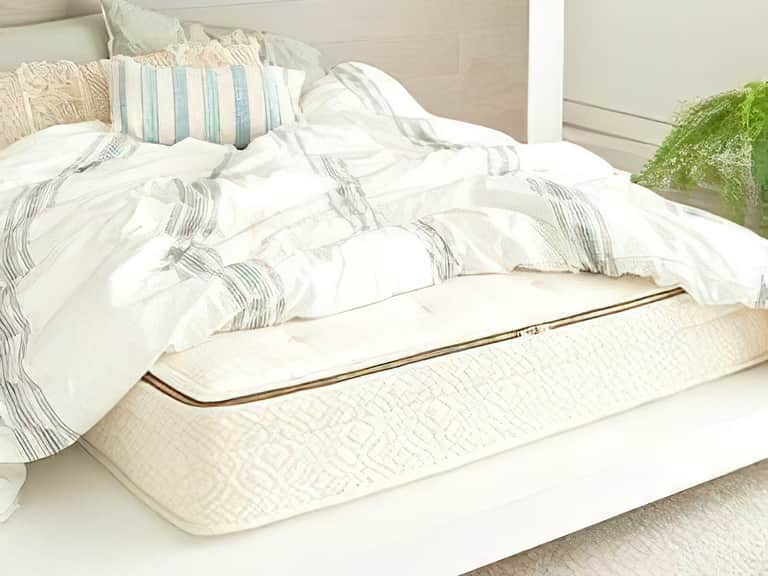
For an example of a hybrid design that combines springs with latex and natural fibers, see the Naturepedic Azure Hybrid Organic Mattress. Its listed construction includes wrapped coils, organic Dunlop latex, and a wool blend with alpaca and cashmere. Specifications can help explain how a mattress is assembled, but they cannot substitute for assessing its firmness, support, and comfort against your own preferences.
Match firmness to sleep position and body
Firmness is one of the first things shoppers notice and one of the easiest to misunderstand. It is a subjective description of the mattress’s surface feel, not a complete measure of support. A firm bed can still fail to support a particular sleeper well, and a softer bed may provide an appropriate balance of contour and stability. The goal is a surface that keeps the body comfortably aligned while reducing unwanted pressure.
Side sleepers often need enough cushioning around the shoulders and hips to avoid concentrated pressure, while still receiving support through the midsection. Back sleepers may prefer a feel that lets the hips settle without allowing the torso to sag. Stomach sleepers commonly look for a comparatively stable surface that helps prevent excessive sinking through the hips. These are starting points, not rules: body shape, weight, mobility, and personal comfort all influence the fit.
Body weight changes how deeply a mattress compresses. A sleeper with a lighter build may experience a mattress as firmer than someone who exerts more pressure on the same layers. Two people sharing a bed may also have different needs. In that case, consider whether the mattress offers an appropriate firmness, a split configuration, or another way to accommodate differing preferences.
When testing a mattress, spend time in your usual sleeping position. Notice whether pressure builds at the shoulders, hips, or other contact points; whether the lower back feels unsupported; and whether turning over requires effort. A brief showroom test cannot fully reproduce a night of sleep, but a careful trial period at home can provide a more useful assessment. Read the trial, return, and exchange terms before ordering.
Temperature regulation is a system, not a single feature
People often describe a mattress as hot or cool, but temperature regulation depends on more than the top layer. Heat and moisture are affected by the sleeper, room conditions, bedding, mattress protector, pajamas, and the way the mattress allows air to move. A product may include breathable materials and still feel warm to someone who sleeps hot or uses heavy bedding.
Coils can create open space inside the support core, which may allow more air movement than a solid block of foam. Yet that advantage can be moderated by dense foam layers, a thick quilted top, or other components above the coils. A comfort layer that closely conforms to the body may also reduce air circulation at the immediate sleep surface. Construction should be judged as a whole.
Foam formulations vary in how they retain and release heat. Latex is often described as more buoyant and less enveloping than some memory foam, but that generalization does not predict the exact feel of a finished mattress. Natural fibers in a cover can contribute to moisture management, but they do not make a mattress immune to warmth. Seek specific material and construction details, and treat terms such as “cooling” as claims to investigate rather than guarantees.
Small changes around the bed can matter. Breathable sheets and a mattress protector designed for airflow may help preserve the surface feel. A supportive foundation that permits ventilation, where recommended by the manufacturer, can also be relevant. If the room itself is warm or poorly ventilated, a mattress alone may not resolve the problem.
- Compare the upper comfort layers, not just the coil core.
- Check whether the cover is removable or washable only when the manufacturer specifically permits it.
- Consider how your usual sheets, protector, and duvet may affect warmth.
- Look for clear descriptions of materials rather than relying on a cooling label alone.
Motion isolation and responsiveness
Couples often want two things that can pull in different directions: a mattress that minimizes disturbance and one that makes changing positions easy. Individually wrapped coils can respond locally, while foam or latex above them may absorb some movement. The amount of motion a partner feels depends on the entire design, the size of the bed, and how dramatically movement is generated.
Foam-heavy comfort layers often dampen motion more than a highly springy surface, though that is not a universal rule. Latex and some hybrid designs may feel lively, which many sleepers enjoy but which can transmit more movement than a deeply contouring surface. A mattress that feels responsive to one person may still isolate motion adequately for another. If sharing a bed, test movement across the mattress when possible and pay attention to the transfer across the middle, not only the edge.
Responsiveness also affects ease of movement. A sleeper who changes position frequently may prefer a surface that rebounds quickly rather than one that holds a deep impression for a moment. The distinction is especially noticeable when comparing some memory foams with latex or more buoyant foams. Comfort is personal: a surface that makes repositioning easy for one sleeper may feel too active to someone else.
Durability, certifications, and practical details
A mattress is a long-term purchase, so construction quality and care deserve attention alongside immediate comfort. Ask about the materials and their placement, the warranty terms, and what the warranty does and does not cover. A warranty is not a guarantee that the mattress will feel unchanged for a particular number of years. Read definitions of defects, required foundations, and any exclusions before making a decision.
Certifications may help clarify particular material or production claims, but they should be read precisely. Different programs evaluate different aspects of a product or supply chain. A certification associated with one component does not automatically apply to every layer, and the scope of the claim matters. Check the current certificate or program information if a standard is important to your purchase.
Practical details can influence whether a mattress is a good fit at home. Compare height and dimensions against the bed frame, sheets, headboard, and room. Consider the mattress’s weight and how it will be moved, especially in tight stairways. Confirm setup requirements and whether the product is designed for a particular foundation. These points are less glamorous than comfort technology, but they can determine how smoothly the mattress works in daily life.
Price should be considered in relation to the full offer: materials, construction, service terms, and the buying experience. A premium material list does not ensure that a mattress will suit you, just as a lower price does not automatically mean poor performance. Focus first on fit and verified specifications, then decide whether the cost and terms are reasonable for your circumstances.
A simple comparison method
When several models appear similar, use the same questions for each one. A consistent method makes product pages easier to compare and helps prevent a single impressive-sounding feature from taking over the decision.
- Identify your priorities. Rank pressure relief, firmness, motion isolation, temperature, edge stability, and material preferences.
- Read the construction from top to bottom. Note the cover, comfort layers, transition layers, coil type, and any stated zoning or edge reinforcement.
- Connect materials to sensations. Consider whether you prefer close contouring, a buoyant surface, or a balance between the two.
- Check firmness in context. Think about your sleeping position, body weight, and whether anyone else will share the mattress.
- Review the fine print. Compare trial periods, return conditions, warranty requirements, delivery, and foundation compatibility.
- Evaluate the complete bed. Include your frame, protector, sheets, and room conditions when thinking about support and temperature.
Keep notes while comparing. A short record of how each mattress feels at the shoulders, hips, lower back, and edges can be more useful than a long list of specifications. If testing in person, use the same position and allow enough time for the initial impression to settle. If buying online, make sure the trial policy is clear and workable before the mattress arrives.
Common comparison mistakes
Choosing by coil count alone. Count does not reveal the full quality or comfort of the support system. Construction and how the mattress feels matter more than a single number.
Assuming hybrid means cool. Coils may promote airflow through the core, but thick or conforming upper layers and bedding can still contribute to warmth.
Treating firmness as support. Firmness describes a feel; support concerns how the bed holds the body. Both matter, but they are not synonyms.
Taking material names as guarantees. Foam, latex, wool, or organic labels do not by themselves predict comfort, lifespan, temperature, or health outcomes. Look at the complete specification and the scope of any certification.
Ignoring the return terms. A mattress may need time to feel familiar, but trial periods vary. Understand the deadlines, fees, and conditions rather than assuming a return will be simple.
The right hybrid is a balance
Hybrid mattresses bring together two broad ideas: a spring-based support core and cushioning layers above it. The best comparison is not the one that identifies the most features. It is the one that connects those features to the sleeper’s actual needs. Coil design can influence support, movement, and airflow; comfort materials shape contouring and responsiveness; firmness determines the first impression but cannot tell the whole story.
For a cooler-feeling sleep surface, consider the complete construction and the bedding around it. For pressure relief, evaluate how the upper layers respond at the shoulders and hips. For stable support, look at the coil system, edge design, and compatibility with the base. For shared sleep, compare motion isolation and ease of movement together.
There is no universal hybrid mattress that suits every body, room, and preference. A thoughtful decision comes from comparing verifiable details, testing the feel in realistic conditions, and giving the mattress’s trial and support policies the same attention as its materials. That is how a crowded field of similar labels becomes a clearer choice—and how the bed beneath you can better serve the night ahead.